Point 01 / 25
Discover Bhutan: A Holiday Built Around Time, Culture & Experience
Bhutan is best experienced at a slower pace. The supplied source emphasises that choosing the right itinerary is less about covering the maximum number of places and more about allowing enough time to experience the destination.
A classic 5–6 day holiday works well for the Paro–Thimphu–Punakha circuit, while 7–10 days allow travellers to add Phobjikha/Gangtey, Haa Valley or Bumthang. Bhutan can combine Himalayan scenery, monasteries, dzongs, cultural traditions, walking trails, village experiences, local food and quiet moments into one distinctive holiday.
For Holiday Besties, the strongest Bhutan products should therefore be built around traveller intent: classic sightseeing, culture, honeymoon, nature, festivals, wellness, photography, family travel or a slower premium-style Himalayan escape.
Point 02 / 25
5 Tips to Choose the Best Bhutan Travel Plan
- Decide how many days you have. A 5–6 day itinerary suits the classic western Bhutan circuit; 7–10 days provide room for additional valleys and experiences.
- Choose the season according to your interests. October–December generally offers clear Himalayan views and crisp weather, spring brings flowers and greenery, while winter can be rewarding for mountain scenery and black-necked cranes.
- Plan around festivals if culture is your priority. Tshechu festivals feature masked dances, traditional costumes, music and religious ceremonies.
- Consider the amount of walking involved. Monasteries, steps and hikes are common. The Tiger's Nest hike is a substantial uphill walk.
- Check current entry and SDF requirements before booking. The source states that Indian visitors require an entry permit and currently pay an SDF of INR/Nu. 1,200 per night; regulations and fees can change.
Point 03 / 25
What to Pack for Bhutan
Bhutan's altitude and changing terrain make layering more useful than carrying very heavy clothing. Many sightseeing days combine road travel with walking and short hikes.
- Comfortable walking shoes with good grip.
- Light thermal wear for colder months.
- Fleece or light jacket and a windproof/waterproof outer layer.
- Full-length trousers, comfortable T-shirts/shirts and warm socks.
- Cap, sunglasses, sunscreen and rain protection.
- For monasteries and dzongs: clothing covering shoulders and knees; remove shoes when required and respect photography restrictions.
- Personal medicines, small first-aid kit, power bank, universal adaptor and reusable water bottle.
- Moisturiser/lip balm, small daypack and copies of important documents.
Point 04 / 25
Flights to Bhutan: Planning the Journey
Paro International Airport is Bhutan's main international airport. Flight schedules can vary by season and operating conditions.
The supplied source notes 2026 connections between Paro and Indian cities including Delhi, Kolkata, Bagdogra and Guwahati, depending on operating airline and date.
- Compare available Bhutanese carriers and schedules rather than assuming one option is always cheapest.
- Compare departure cities such as Delhi, Kolkata, Bagdogra and Guwahati depending on your origin.
- For travellers in eastern India, Kolkata can be a useful gateway when services operate on the required date.
- Compare dates around major festivals if price is a priority.
- Compare the complete journey cost, including positioning flights, baggage, transfers and possible overnight stays.
- Allow flexibility because mountain weather and operating conditions can affect flights.
Point 05 / 25
5 Unique Facts About Bhutan
- Bhutan is internationally associated with Gross National Happiness, a philosophy that places wellbeing alongside conventional economic indicators.
- Bhutan's constitution mandates maintaining at least 60% forest cover for all time; the source also describes Bhutan as widely recognised as carbon-negative.
- Thimphu is widely known for being the national capital without conventional traffic lights.
- Archery is Bhutan's national sport and remains deeply embedded in cultural life.
- Traditional architecture remains highly visible through dzongs, monasteries and houses featuring distinctive woodwork and painted designs.
Point 06 / 25
Where to Stay in Bhutan: Choose the Base Around the Experience
Accommodation should be selected by location, views, sightseeing access and the type of holiday experience desired rather than by star rating alone.
- Paro: ideal for the airport, Tiger's Nest, Rinpung Dzong and valley sightseeing; suitable for luxury, cultural and wellness stays.
- Thimphu: convenient for capital-city sightseeing, cultural institutions, markets and dining.
- Punakha: well suited to valley views, Punakha Dzong, rice fields, cultural sightseeing and wellness-oriented stays.
- Phobjikha/Gangtey: a nature-focused base for valley scenery, Gangtey Monastery and winter black-necked crane experiences.
- Other valleys: longer itineraries can use Haa Valley or Bumthang for deeper cultural and landscape experiences.
- Budget-conscious travellers: certified hotels, guesthouses and homestays can provide comfortable ways to experience Bhutan without requiring luxury accommodation.
Point 07 / 25
Top Historical Landmarks in Bhutan
- Rinpung Dzong — Paro: a major fortress-monastery overlooking the valley and an important centre of religious and administrative heritage.
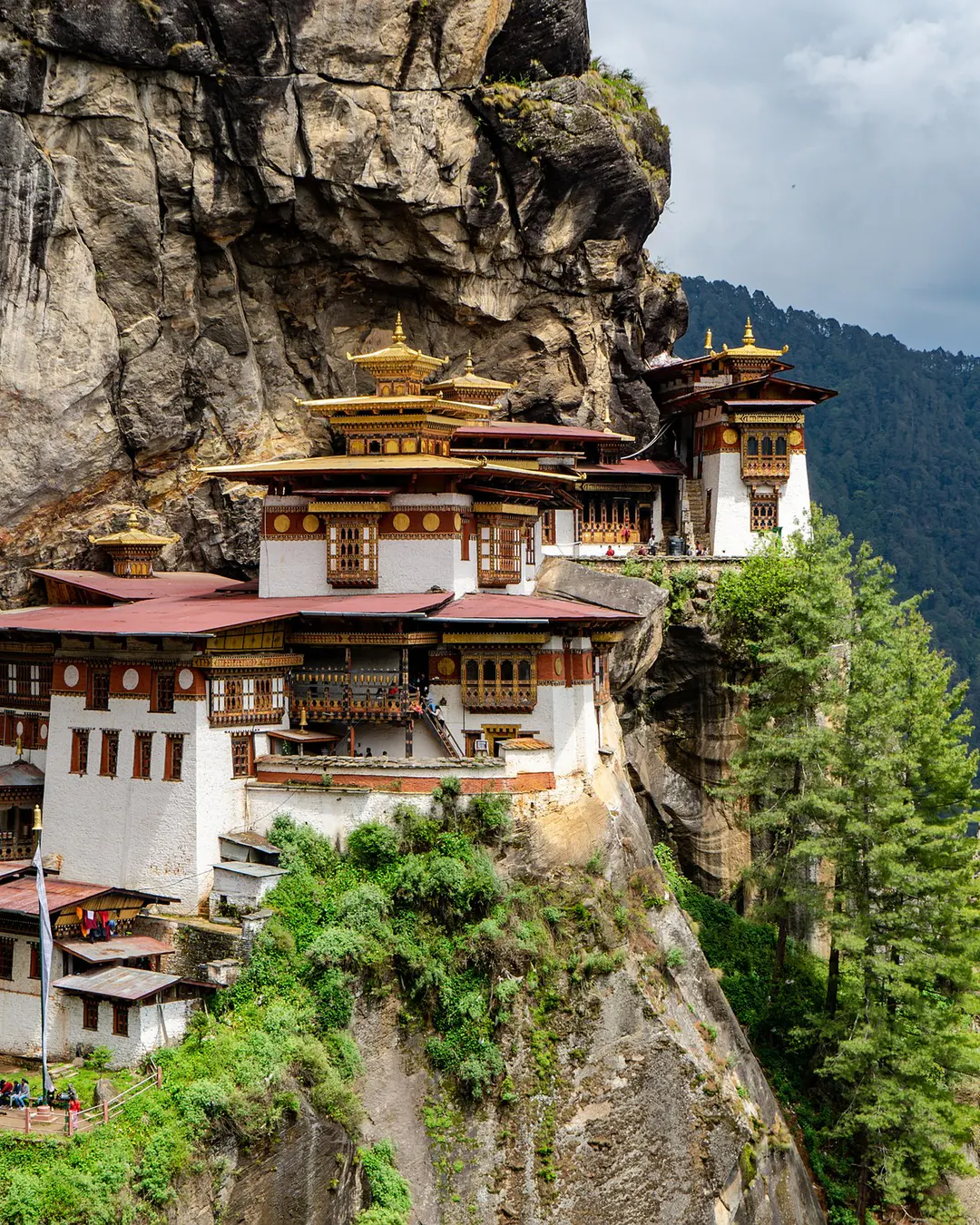
- Taktsang Monastery / Tiger's Nest: Bhutan's iconic cliffside monastery associated with Guru Rinpoche and reached by a substantial uphill hike.
- Punakha Dzong: dramatically positioned at the confluence of the Pho Chhu and Mo Chhu rivers.
- Tashichho Dzong — Thimphu: a major religious and administrative landmark and important festival venue.
- Drukgyel Dzong — Paro: atmospheric historic ruins in the upper Paro Valley with mountain views.
- Trongsa Dzong — Central Bhutan: a major historic fortress important to understanding Bhutan's east-west connections.
Point 08 / 25
7 Best Things to Do in Bhutan
- Hike to Tiger's Nest: the quintessential Bhutan experience; plan according to your fitness and comfort.
- Explore Thimphu: Buddha Dordenma, Tashichho Dzong, Memorial Chorten, markets and cultural institutions.
- Visit Punakha Dzong: combine the dzong with the valley and nearby cultural attractions.
- Walk to Khamsum Yulley Namgyal Chorten: enjoy a route through rice fields and across a suspension bridge.
- Experience traditional Bhutanese archery: demonstrations or participation can be included in cultural itineraries.
- Explore Phobjikha Valley: scenery, Gangtey Monastery, nature trails and winter black-necked cranes.
- Enjoy a traditional hot-stone bath: a relaxing wellness experience after sightseeing or hiking.
Point 09 / 25
Planning Your Honeymoon in Bhutan
Bhutan can be particularly appealing for couples who prefer mountains, privacy, culture and slow travel rather than conventional beach-resort holidays.
- Paro: relaxed valley stay, Rinpung Dzong and the Tiger's Nest hike.
- Thimphu: capital sightseeing, couple's wellness experience and scenic dining.
- Punakha: rice fields, Punakha Dzong and Khamsum Yulley Namgyal Chorten.
- Phobjikha: valley-view accommodation and peaceful nature experiences.
- Honeymoon planning: allow leisure time, choose wellness-focused stays, request valley views where available, keep one flexible day, plan the Tiger's Nest hike according to fitness and consider a private vehicle for comfort.
Point 10 / 25
8 Essential Guidelines for Your First Bhutan Trip
- Carry the correct travel document. Indian citizens can use a valid Indian passport or Voter ID for entry; minors have additional documentation requirements.
- Arrange the entry permit in advance. The source recommends arranging it beforehand to reduce waiting.
- Budget for the SDF. Indian visitors currently pay INR/Nu. 1,200 per person per night according to the supplied source.
- Respect religious customs. Dress modestly and behave quietly at sacred sites.
- Ask before photographing people. This is especially important during religious ceremonies and festivals.
- Do not rush the itinerary. Road journeys can take longer than the distance on a map suggests.
- Carry some cash. Cards are widely accepted in urban areas, but access can be more limited outside major towns.
- Keep flexibility. Weather can affect mountain travel and flights.
Point 11 / 25
Shopping in Bhutan
Bhutan is well suited to travellers who enjoy handmade, cultural and locally produced souvenirs.
- Traditional textiles: handwoven fabrics, scarves, bags and traditional gho/kira textiles.
- Handicrafts: wooden products, bamboo and cane items, carved objects and traditional masks.
- Thangka paintings: traditional religious artwork created using established Bhutanese artistic techniques.
- Jewellery: traditional Bhutanese designs in gold, silver and other materials.
- Dzi beads: distinctive Himalayan collectibles; buyers should be cautious about authenticity and pricing.
- Bhutanese paper: handmade Desho paper products make lightweight souvenirs.
- Tea and honey: locally produced food items can make practical gifts.
- Shopping areas: Thimphu markets, handicraft markets, local textile stores, Paro town shops and craft bazaars.
Point 12 / 25
7 Ways to Travel to Bhutan on a Budget
- Compare flight gateways such as Delhi, Kolkata, Bagdogra and Guwahati according to your starting point and available dates.
- Compare shoulder-period dates immediately before or after major festival periods.
- Choose comfortable mid-range hotels where luxury is not essential.
- Travel as a family or group so vehicle and guide costs can be shared.
- Choose a focused western Bhutan itinerary such as Paro–Thimphu–Punakha to reduce additional driving.
- Avoid unnecessary domestic flights where practical; road travel can also reveal more of the countryside.
- Choose local experiences such as walking trails, markets, dzongs and cultural sightseeing instead of automatically adding premium activities.
- Remember: include the mandatory SDF in the holiday budget from the beginning.
Point 13 / 25
Interesting Facts About Bhutan
- Bhutan is officially known as the Kingdom of Bhutan.
- Its traditional name, Druk Yul, is associated with the Land of the Thunder Dragon.
- Dzongs combine religious and administrative functions.
- Traditional national dress remains important in official and cultural settings.
- Bhutanese architecture is known for intricate painted woodwork.
- Traditional archery remains an important part of Bhutanese culture.
- Phobjikha Valley is an important winter habitat for black-necked cranes.
- Bhutan has extensive Himalayan biodiversity.
- Zorig Chusum refers to Bhutan's traditional 13 arts and crafts.
- Bhutan's tourism philosophy places strong emphasis on sustainability and preservation.
Point 14 / 25
Top Bhutan Activities to Include in Holiday Packages
Core experiences: Tiger's Nest hike, Paro sightseeing, Rinpung Dzong, Thimphu city tour, Buddha Dordenma, Tashichho Dzong, Punakha Dzong, Dochula Pass, Khamsum Yulley Namgyal Chorten, suspension bridge walk, traditional archery, Bhutanese cuisine, local handicraft shopping, farmhouse visit, traditional hot-stone bath, Phobjikha Valley, Gangtey Monastery, nature walk, festival experience and cultural performance.
Point 15 / 25
8 Bhutan Festivals to Experience
Bhutan's festivals are closely connected with Buddhist traditions, community life and local culture. Dates follow the Bhutanese lunar calendar and can change from year to year.
- Paro Tshechu: famous for masked dances, folk performances and the unveiling of the Guru Thongdrel.
- Thimphu Tshechu: a major capital-city festival known for masked dances and large community participation.
- Punakha Tshechu: a major cultural festival associated with Punakha and its historic dzong.
- Gangtey Tshechu: held at Gangtey Monastery in Phobjikha Valley, combining festival culture with mountain scenery.
- Jambay Lhakhang Drup: a celebrated Bumthang festival known for distinctive religious dances and traditions.
- Wangdue Tshechu: a colourful regional festival in Wangdue Phodrang.
- Trongsa Tshechu: a historic festival featuring traditional sacred dances.
- Black-Necked Crane Festival: a nature-and-culture event associated with the arrival of cranes in Phobjikha Valley.
- 2026 planning note: the supplied source lists Gangtey Tshechu on 24–26 September, Jhomolhari Mountain Festival on 14–15 October, Royal Highland Festival on 23–24 October and Black-Necked Crane Festival on 11 November. Reconfirm dates before publishing fixed-date departures.
Point 16 / 25
Top 10 Historical Places to Visit in Bhutan
- Taktsang / Tiger's Nest — Paro.
- Rinpung Dzong — Paro.
- Drukgyel Dzong — Paro.
- Kyichu Lhakhang — Paro.
- Tashichho Dzong — Thimphu.
- National Memorial Chorten — Thimphu.
- Punakha Dzong — Punakha.
- Chimi Lhakhang — Punakha District.
- Trongsa Dzong — Trongsa.
- Gangtey Monastery — Phobjikha.
Point 17 / 25
Bhutan Food Guide: What to Try
The supplied source highlights several dishes that can become part of a genuine Bhutanese culinary experience.
- Ema Datshi — a signature Bhutanese preparation.
- Phaksha Paa — a traditional Bhutanese pork preparation.
- Jasha Maru — a popular Bhutanese chicken preparation.
- Momos — a familiar Himalayan favourite.
- Thukpa — a comforting noodle soup.
- Red rice — an important traditional grain.
- Traditional Bhutanese tea — part of the local food experience.
Point 18 / 25
Tourist Places During Bhutan City & Valley Tours
Paro: Rinpung Dzong, National Museum/Ta Dzong, Kyichu Lhakhang, Paro town, Drukgyel Dzong, Tiger's Nest and local handicraft shops.
Thimphu: Buddha Dordenma, Tashichho Dzong, National Memorial Chorten, Folk Heritage Museum, National Institute of Zorig Chusum, textile-related cultural attractions, local markets, weekend market and craft/souvenir stores.
Punakha: Punakha Dzong, suspension bridge, Khamsum Yulley Namgyal Chorten, Chimi Lhakhang and valley viewpoints.
Point 19 / 25
What to Pack — and What Not to Pack
Pack: layered clothing, warm jacket, comfortable trousers, full-sleeve shirts, thermal wear during colder months, comfortable walking shoes, rain jacket, passport/ID, entry-permit documents, travel insurance documents, medicines, sunglasses, sunscreen, power bank, camera, water bottle and small backpack.
- Don't overpack
- Bhutan itineraries often involve moving between valleys, so travelling light makes transfers easier.
- Avoid uncomfortable footwear
- proper walking shoes matter on Bhutan's trails.
- Avoid overly revealing clothing
- respectful clothing is particularly important at temples, monasteries and dzongs.
- Avoid unnecessary single-use plastic
- environmentally responsible travel suits Bhutan's sustainability focus.
- Check restricted/prohibited items
- always confirm current customs and immigration rules before departure.
Point 20 / 25
Getting Ready for a Bhutan Tour
Documents: valid Indian passport or Voter ID, Bhutan entry permit, flight tickets, hotel confirmations, travel insurance and emergency contacts.
Money: budget for SDF, carry some Bhutanese currency, an internationally usable card and emergency cash.
Health & fitness: be prepared for altitude and uphill walking, break in walking shoes, carry regular medication, stay hydrated and avoid scheduling a demanding hike immediately after a long travel day if you are not accustomed to altitude.
Cultural etiquette: dress modestly, remove shoes when required, respect photography restrictions, avoid disturbing prayers and ask before photographing people during religious ceremonies.
Transport: the supplied source states that Bhutan is primarily experienced by road and that the tourism authority recommends using a vehicle and driver through a recognised tourism service provider; self-drive rental is not permitted in the usual tourist system.
Most importantly: don't rush Bhutan. Leave time for viewpoints, villages, local meals, monasteries, conversations and simply enjoying the Himalayan landscape.
Point 21 / 25
Quick Bhutan Travel Snapshot
- Destination
- Kingdom of Bhutan
- Capital
- Thimphu
- Main International Airport
- Paro
- Indian Visa Requirement
- No visa; entry permit required
- Indian Travel Documents
- Passport or Voter ID
- Current Indian SDF
- INR/Nu. 1,200 per person per night
- Main Tourist Circuit
- Paro – Thimphu – Punakha
- Popular Extended Destination
- Phobjikha / Gangtey
- Famous Landmark
- Tiger's Nest
- National Sport
- Archery
- Popular Festival
- Tshechu
- Currency
- Bhutanese Ngultrum
- Main Languages
- Dzongkha; English widely used in tourism
- Recommended Footwear
- Comfortable walking/hiking shoes
- Ideal Planning Approach
- Culture + Nature + Leisure
- Major Consideration
- Mountain roads and changing weather
Point 22 / 25
Ready-to-Use Bhutan Holiday Concepts
- Classic Bhutan Escape — 5N/6D: Paro + Thimphu + Punakha. Focus on Tiger's Nest, dzongs, capital sightseeing, valley landscapes and Bhutanese culture.
- Bhutan Honeymoon Escape — 6N/7D: Paro + Thimphu + Punakha + optional Phobjikha. Add valley-view stays, wellness, scenic dining, private time and a flexible day.
- Bhutan Culture & Festival Journey — 5N/6D: Paro + Thimphu + Punakha around a suitable Tshechu or cultural event, subject to confirmed dates.
- Bhutan Nature & Valley Escape — 7N/8D: Paro + Thimphu + Punakha + Phobjikha/Gangtey. Focus on mountain landscapes, nature walks and black-necked crane season where applicable.
- Grand Bhutan Experience — 9N/10D: combine the western circuit with an extended valley such as Haa or Bumthang, allowing more time for culture, villages, nature and slower travel.
Point 23 / 25
Build Bhutan Around the Traveller
Bhutan works best when the itinerary is designed around how the traveller wants to experience the country rather than how many attractions can be ticked off.
Holiday Besties can build distinct Bhutan holiday themes around culture, nature, honeymoon, festivals, wellness, photography, family travel, walking and slow Himalayan exploration.
- Bhutan Classic: Paro + Thimphu + Punakha
- Bhutan Honeymoon: Paro + Thimphu + Punakha + romantic valley experiences
- Bhutan Culture: Dzongs + monasteries + festivals + archery + local traditions
- Bhutan Nature: Phobjikha/Gangtey + valley walks + Himalayan scenery
- Bhutan Wellness: hot-stone bath + spa/wellness + relaxed valley stays
- Bhutan Festival: Tshechu + cultural performances + local food + heritage
- Bhutan Extended: Western Bhutan + Haa Valley or Bumthang
Point 24 / 25
Frequently Asked Questions
How many days are ideal for Bhutan?
The supplied source suggests 5–6 days for the classic Paro–Thimphu–Punakha circuit and 7–10 days for adding destinations such as Phobjikha/Gangtey, Haa Valley or Bumthang.
What is the main Bhutan tourist circuit?
Paro – Thimphu – Punakha is the main circuit identified in the source.
What is the most famous Bhutan attraction?
Taktsang Monastery, popularly known as Tiger's Nest, is the country's iconic landmark.
Is Bhutan suitable for honeymoon travel?
Yes, the source specifically positions Bhutan as suitable for couples seeking mountains, privacy, culture and slow travel.
What should Indian travellers carry?
A valid Indian passport or Voter ID, along with the required entry permit and supporting travel documents.
What is the current Indian SDF mentioned in the source?
INR/Nu. 1,200 per person per night. This is time-sensitive and should be reconfirmed before booking.
Do I need to prepare for walking?
Yes. Monastery visits, steps, trails and the Tiger's Nest hike can involve substantial walking and uphill sections.
Can I rush Bhutan into a short sightseeing trip?
The source strongly recommends against rushing the destination. Road journeys, viewpoints, villages, monasteries and cultural experiences deserve time.
Point 25 / 25
Final Thoughts: Let Bhutan Be Slow
Bhutan's greatest strength is not simply the number of places a traveller can visit. It is the quality of the experience between those places: the mountain road, the monastery, the village, the valley, the local meal, the prayer flag, the archery field and the quiet Himalayan landscape.
A well-designed Bhutan holiday gives travellers enough time to walk, pause, explore and absorb the culture. Whether the journey is built around Tiger's Nest and the western circuit, a honeymoon, a festival, Phobjikha's nature, wellness or a longer cultural exploration, the destination rewards a thoughtful pace.
For Holiday Besties, Bhutan can therefore be positioned as a journey of culture + nature + leisure — a Himalayan holiday where the itinerary leaves room to actually experience the destination.
Visa rules, entry requirements, opening hours, festival dates, prices and schedules change from time to time. Please check the latest information before you book — our team will confirm everything for your dates.